
by Babatunde Odofin
The Greensboro Greenway project, also known as the Downtown Greenway, is a groundbreaking urban trail network designed to encircle the heart of the city, facilitating connectivity, increasing green areas and encouraging active lifestyles. Initiated in the early 2000s, the objective is to establish a four mile pathway for walking and biking that not only improves urban mobility but also acts as an inviting communal space. The concept originated as part of Greensboro’s efforts to revitalize the urban landscape, aimed at linking downtown with adjacent neighborhoods and offering safe, easily accessible routes for walking, cycling and other outdoor pursuits. Construction commenced around 2010 and has been advancing in stages, with sections being opened gradually as funding and design elements are finalized. The trail is notable for its dedication to public art, featuring works by both local and national artists that celebrate the city’s heritage and culture, thus positioning the Greenway as both a recreational and cultural treasure.
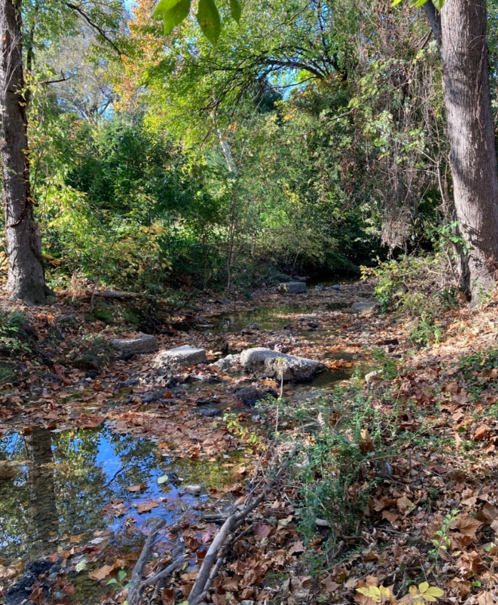
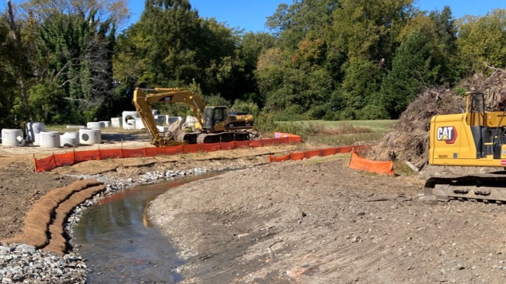
Before and after photos of the Downtown Greenway project (photos courtesy of Dr. Sandra Cooke).
The Downtown Greenway project, which constitutes the final lap of the renovation project, started in 2022 with over 50 million dollars in funding raised. “This section is called the western branch of the Downtown Greenway,” said Dr. Sandra Cooke, assistant professor biology at GC and member of the Downtown Greenway landscaping committee. According to Cooke, the pathway is about one mile and follows the old Norfolk and southern railroad line. This section runs alongside our campus, from Spring Garden Street on its southern end to Smith Street at its northern end. The stream that runs along this section is called the college branch. Around 20 years ago, Greensboro College adopted the section between Market and McGee Streets as part of the city of Greensboro’s Adopt-A-Stream clean-up program. GC will resume its twice-a-year stream clean-ups once the Downtown Greenway project is completed.
Additionally, Greensboro’s project partners are focused on sustainability, incorporating rain gardens to manage stormwater runoff and native plants to foster local biodiversity. Tree planting initiatives are also part of the project, creating shaded areas and contributing to the city’s ongoing tree canopy goals. Furthermore, new recreational amenities, such as seating areas, workout stations, and dedicated bike lanes are being added to cater to diverse needs. To ensure a safer experience for all Greenway users, the project includes the installation of solar-powered LED lighting and new emergency call boxes along the trail. These enhancements aim to encourage more residents to engage in outdoor activities, providing a natural escape within the city for walking, biking, jogging and even picnicking.
Local environmental groups have shown strong support for the project. The Greenway renovation will not only make outdoor spaces more accessible but also sustainable. It is important to maintain the city’s green areas while reducing the ecological footprint. The greenway renovations are expected to positively impact nearby businesses, as increased foot traffic could boost local commerce. Community organizations are also preparing to host events along the revitalized paths, such as community fitness classes, nature walks and outdoor festivals that will bring together residents from all walks of life. City leaders have expressed optimism that the enhanced Greenway will become a core part of Greensboro’s identity, providing benefits for both residents and visitors.
“Greensboro has a vision of becoming one of the greenest, most accessible cities in North Carolina” said Greensboro Mayor Nancy Vaughan in an interview. According to Vaughan, “the Greenway project is just one way we are working to improve our quality of life, enhance urban connectivity and make our city more resilient.” So far, three miles of the Downtown Greenway are accessible, including parts on the north, east and south sides. According to Cooke, “they have been working with a revised timeline and the last mile on the west side is currently being built and is expected to be completed by spring of 2026.”
Residents of Greensboro are looking forward to the project’s completion and the community-wide impact of the renovation cannot be overemphasized. This Greenway is more than just a trail, it is a lifeline connecting Greensboro neighborhoods and a vital space for exercise, relaxation and community interaction. We commend the efforts of those who have been involved in this project and are excited to see how it will help bring the community together once the renovations are complete.
 The Collegian