
by Diana Castro-Vazquez
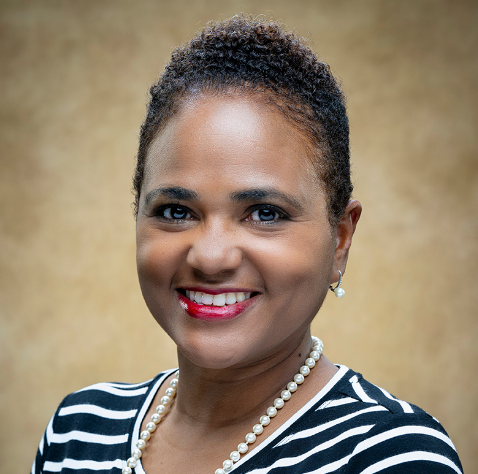
On Tuesday, November 5, 2024, Dr. Hope Jackson was the guest speaker at Greensboro College’s recurring ProfTalk. Jackson is an assistant professor of English and “teaches undergraduate and graduate courses ranging from Composition to African American Film and Culture as well as Hip-Hop Discourse,” according to her biography. She has also written many book chapters, journals and a book in 2020. Her book is titled “The Stories of a Building the Black Beach Community of Ocean City, North Carolina.”
Jackson explains Afrofuturism using a definition from Mark Dery’s book Flame Wars: The Discourse of Cyberculture: “speculative fiction that addresses themes and concerns of the African American community with technoculture.” Dery uses speculative fiction to address any concerns and issues within the African-American community using technoculture. Jackson defines technoculture as the use of technology and culture mixing; some examples given by the audience include social media and science fiction.
Even though Dery coined the term Afrofuturism, Jackson wanted to expand on it with her research, focusing more on the lens of the framework of Ytasha Womack. Womack centers Afrofuturism around 5 things: liberation, mysticism, imagination, technology and black cultures. You can go even further, and Afrofuturism can be seen when you look at the specific artistic aesthetic forms: music, visual art, literature, dance and film. Jackson focuses on hip hop and the 5 principles: emceeing, DJing, breakdancing, graffiti art (tagging) and knowledge. She takes these 5 principles and applies them to Afrofuturism.
She only covers emceeing, DJing, and breakdancing. Emceeing is when an artist uses their voice in a technician way, like beatboxing. Jackson uses Doug E. Fresh and plays some of his music to demonstrate how he uses his voice to beatbox. There are many examples of artists doing the same way.
She then covers DJing, which she refers to as turntable technology. She reminisces about the period she was growing up in and how it was the hip hop generation. When she was growing up, the record player was how most people consumed music. She owned 45’s and albums, and there was a significant notion about albums and how much of an experience it was. Everything changed when people like DJ Kool Herc saw the potential of doing more than just playing the sound on the record. And what he came up with is what Jackson refers to as turntable technology. DJ Kool Herc realized that many songs had breaks in them, such as instrumentals, and he wondered what would happen if he put them all together in a technique called the “Merry-go-round.” More could be done than just play record; during the playing of this, people would stomp their feet, clapping their hands, etc…
Jackson then discusses breakdancing, showing a very informative video, “The Science of Breakdancing with El Niño (Ep. 9),” by “World’s Greatest” on YouTube. Breakdancing is a sport that requires many things, including muscle strength, joint stability, core strength, power, cardiovascular endurance and flexibility. El Niño further breaks down breakdancing into four elements: top rock, footwork, power moves and freezes. Top rock is during the instrumental and takes place in the beginning, involving rhythm to feel the music. Footwork is next, which El Niño describes as the most tiring and challenging because it takes so much energy out of the person. It is mostly down closer to the floor. Next is power moves, which are all the spins that are done. Power moves can use every part of the body and give the “wow” factor. Lastly are the freezes – this is when you lock the movement to finish the dance.
Jackson also explains the origin of hip hop. Black and brown individuals were mad because of their living conditions. At the time, the Cross Bronx Expressway was being built through the Bronx, misplacing many people of color. People had to live in the rubble and were in horrible conditions. The people living here wanted to express themselves in a nonviolent manner, and they did so through hip hop. Jackson states, “While it was beautiful, it was not created without others. And it was created because of the generations of individuals that existed before them. Sampling is significant to hip hop. Sampling means everything to hip hop.” It is very interesting to see all the music that has been sampled from past music, even in the present time.
This was a very informative ProfTalk in which Dr. Jackson discussed hip hop and its meaning for Afrofuturism. I recommend reading her book and other published works, which explore hip hop and African American culture in more depth. She also offers many classes next semester that everyone should check out.
 The Collegian