
by Riley Blankenship
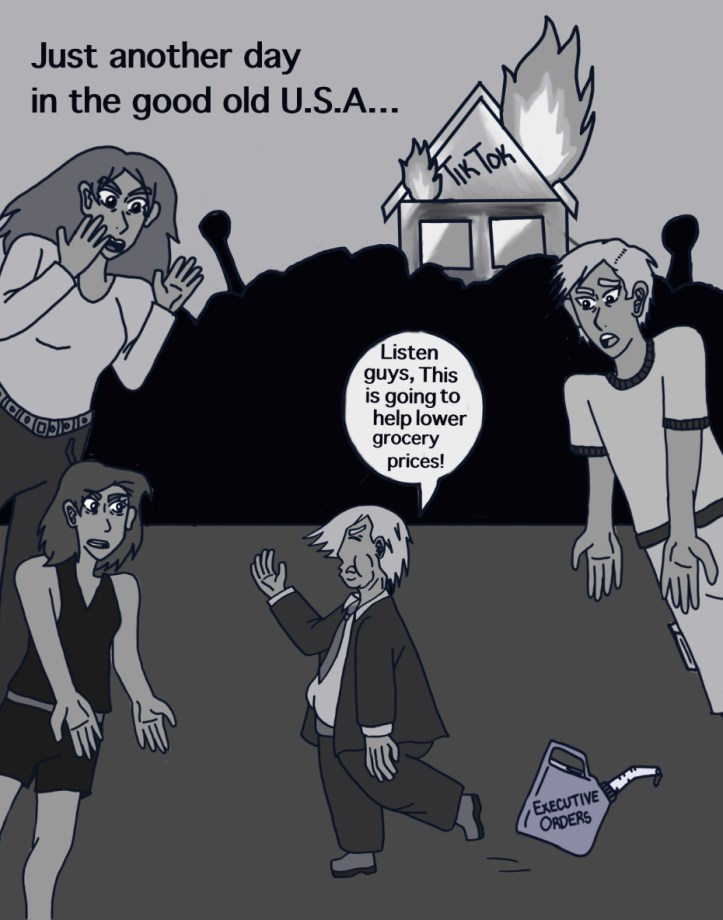
The U.S. government officially banned TikTok, one of the most popular social media platforms in the world. The decision to remove the app from U.S. app stores was met with significant criticism, especially from content creators, small businesses and everyday users who rely on the app for entertainment and especially income. The ban is the result of growing concerns over data privacy and national security, as lawmakers fear that TikTok’s parent company, ByteDance, has ties to the Chinese government that could put American user data at risk.
The push to ban TikTok is not new. For years, U.S. officials have debated whether the app poses a national security threat due to its data collection practices. While TikTok has repeatedly denied allegations of sharing data with the Chinese government, concerns over potential spying and misinformation campaigns have persisted. In response, lawmakers passed legislation that forced TikTok to either sell its U.S. operations to an American company or face a ban. With no deal reached by the January 18 deadline, the ban was in place.
The effects of the ban were felt all across social media. Users who already had TikTok downloaded could still access the app, but new downloads and updates were blocked. Many influencers and businesses who relied on TikTok for engagement and income scrambled to transition to alternative platforms such as Instagram Reels and YouTube Shorts. Protests erupted online with users expressing frustration over the government’s decision, arguing that the ban limits free speech and economic opportunities.
As a political science major and someone who values our Constitution greatly, I have very strong feelings about this. This was a complete violation of our freedom of speech marked in our First Amendment right. Moreover, this raises a question in my mind of the former CEO of TikTok, what exactly happened behind the scenes while the ban was in place?
Despite the ban, legal challenges are already underway. TikTok has vowed to fight the decision in court, and some lawmakers are pushing for a compromise that would allow the platform to return under certain conditions. Meanwhile, users continue to adapt, unsure of what the future holds for one of the most influential social media platforms of the digital age.
 The Collegian