
by Shaniah Taylor
For years the life simulator video game genre has been dominated by one titan: The Sims franchise. Since its debut in 2001, Electronic Arts (EA) and Maxis basically held a monopoly in this genre. The Sims offered players a virtual dollhouse with an extensive built in story as well as the opportunity to craft your own stories filled with drama, fantasy and a touch of reality. If you do not play the Sims you may be asking– “Why play a game that mimics reality when gaming is supposed to be an escape from it?” or “What is the draw of playing a game where you have to control a person’s life as they do mundane tasks like laundry or work?” Well, for many, The Sims was a world in which anything was possible. Or at least, it should have been.
Despite its success, there has always been a rumbling in the community– one that has grown especially strong recently. Competitors like Life by You , Paralives, and countless others have tried–and largely failed– to dethrone The Sims, as they are usually made by smaller companies and face development hurdles or lack of traction with the fewer resources compared to big companies like EA. The discontent does not come from these failed projects however, the projects are made because of player’s discontent. Many issues have been brought to light by the community such as The Sims 4 abandoning the open world freedom it’s predecessor had, too many loading screens, the lack of features offered compared to previous games, unfinished content along with bugs the creators don’t fix and, most infamously, its price tag.
Until recently the game cost $40 and had many different types of downloadable content ranging from $40 for a pack to $5. However with 86 total packs–and counting– that means even with a free base game it costs about $1,500 to play it in its entirety. This has caused players to feel trapped–EA knows it does not have any major competition so they have no reason to stop releasing paid content or even make sure the content functions properly. And players having no alternative were forced to grumble and open their pockets until an alternative came.
That is when hope finally arrived in August 2024 in the form of InZOI, the Sims’s most promising competitor.

The game’s reveal sent shockwaves through the community, especially when its character creator showcased inclusivity The Sims had only recently—and imperfectly—attempted. While The Sims 4 took six years to improve its lacking skin tone options and introduced buggy custom pronoun settings in 2024, InZOI promised diversity from the start. Its hyper-realistic style divided fans (some missed The Sims’ whimsy), but its progress in representation was undeniable—a win for The Sims’ community of mostly marginalized players.

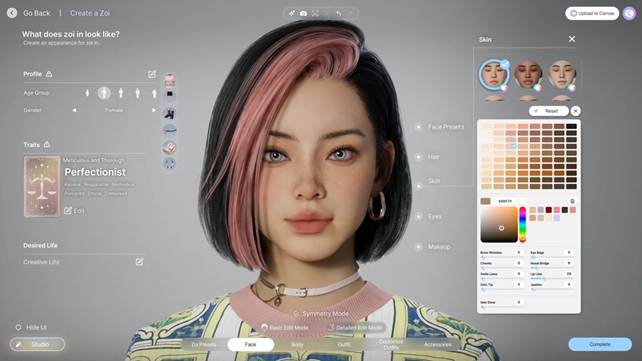
Even more shocking to simmers was that InZOI promised a $40 price tag that would pay for the game and ensure all future content was free. Skepticism was high as we have had many ambitious games come and go in this industry making promises they could not keep. And as delays pushed InZOI’s initial early access release date back from 2024 to 2025 many believed it would fail like the others. And yet with little warning, InZOI’s early access launched March 27, 2025, against all odds.
Reviews were a bit critical but leaned positive upon its release. The game unveiled many of the Sims community’s most asked for features such as an open world, driveable cars, and very detailed customization of houses as well as in the creation of Zois, the in-game characters. For many it was enough to declare InZOI their new game of choice.
But not everyone is convinced or ready for this transfer of power. Concerns rise over InZOI’s use of AI in build mode–a feature you are not able to opt out of. It has drawn criticism from many Youtubers such as FakeGamerGirl who have refused to cover the game due to its lack of transparency regarding where the source images for the AI’s training are coming from.
The Sims has had over 20 years to cultivate its image and build its games and InZOI’s success after only two years in development is something players have been craving to see as they hope someone can bring some good competition to a genre long controlled by one franchise. Whether it can sustain this momentum–or fix its ethical concerns regarding AI– remains to be seen. But for the first time in 25 years, The Sims has a rival that may stand a chance.
 The Collegian