
By Jhanay Edmonds
This year marks the 100th anniversary of Black History Month. February is a month dedicated to celebrating Black culture, Black people and Black history. There are several important figures that are typically highlighted during this time of year, such as MLK, Malcolm X, Rosa Parks and Harriet Tubman. While they have all earned their recognition; there is someone who is less well-known and just as deserving of a spotlight.
For my senior capstone project, I chose to highlight the literary genius Phyllis Wheatley and what is known as a “Phyllis Wheatley Moment.” Wheatley was brought to America to be a slave as a child. It was discovered by the family that bought her that she was in-fact very intelligent. She picked up on subjects such as astronomy and science. However, her true passion became poetry. At the time, the ability to write poetry was seen as one of the highest signs of intelligence. Wheatley was the first African American author to publish a book of poetry, but it did not come without its challenges. As a small and frail child, she was questioned and criticized by white men who saw her as nothing more than a slave. The term “Phyllis Wheatley Moment” refers to the trials (literally and figuratively) she as a Black woman had to endure to prove herself to white society. Through this project my goal was to give other Black women the opportunity to tell the story of their own Phyllis Wheatley Moment.
My first interview was with Dr. Jackson, a professor here at Greensboro College and the one who introduced me to Wheatley in her African American Slave Narratives class. Going into this project I had certain expectations about how the interviews would go. My goal was to transform their experiences into poetry in order to evoke the emotions of the audience. With this expectation in mind, I began to conduct the interviews. My conversation with Dr. Jackson was eye-opening to say the least.
She detailed her experience at the beginning of her career as a professor. While I expected most of these stories to come from a place of sadness and frustration, hers stemmed from a place of anger and rightfully so. It was after that interview that I remembered that my people, Black people, often put emotions such as sadness on the back burner as we were not afforded the opportunity for any kind of weakness.
That became more evident when the time came for me to interview my mother and sister. While I have always known my family to be stoic, I wanted to give them the opportunity to be vulnerable. Though I took them to separate rooms to make them feel more comfortable opening up, the moments that they described were similar to my first interview in the sense that it was about their professional environments.
At this point in the project, I was becoming lost. I wanted more variety. But after sitting down and evaluating all of the information I had gathered, I realized something. I was a hypocrite. How could I say that I was providing a space for us when I wanted to dictate what stories were told and how? In my eyes it made me no better than the oppressors. On top of that, I had yet to identify my own Phyllis Wheatley moment. How could I, as someone who was familiar with societal pressures and unrealistic expectations, project those sentiments onto my subjects?
After reevaluating my approach, I decided that the best way to keep the project authentic was to do away with all my previous expectations. The goal was always to give these women the chance to tell their stories their way.
Once I had given up my need to control the outcome, my project began to come together. An interview with my niece, although I did not include it, put things into perspective for me. I wanted the generations after me to know that they do not have to hide themselves to appease society. I wanted them to know that there is power in their tears and that it is okay to cry. We as Black women have carried the world in our wombs and on our shoulders for centuries. I called my project “Listen When the Roses Whisper” because I felt that roses encapsulated the very essence of Black women.
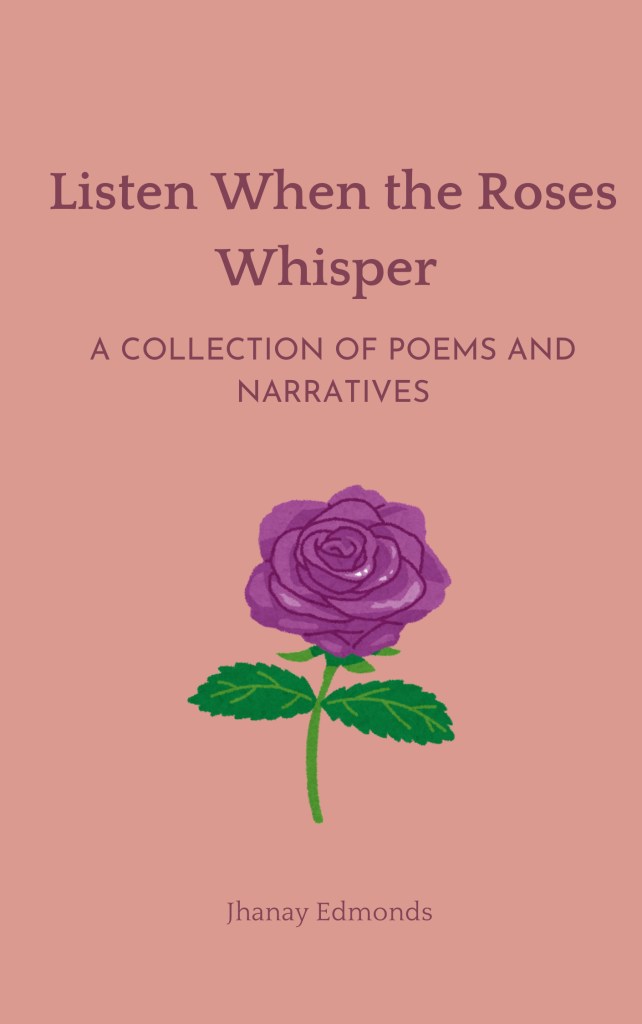
We are elegant, graceful and strong. While we may appear delicate, the thorns are a reminder that we are always protecting ourselves and others. In the end, my capstone project was something to be proud of. I feel as though I gave a voice to those who are otherwise silenced. I hope that I can inspire others to listen to the roses because they deserve to be heard.
 The Collegian