
By Lila Shortell
How often do you grab an energy drink from the vending machine on your way to
class or practice? Did you get an iced coffee from Britt’s this morning since the weather is
warming up? You are not the only one; I am even drinking an Alani as I write this.
Caffeine is the most widely consumed stimulant drug in the world – in North America
alone, studies show that 90 percent of people consume caffeine. With college students,
over 50 percent regularly intake caffeine, with 34 percent consuming it daily. But how many of us know what this excessive caffeine intake is doing to our bodies and minds?
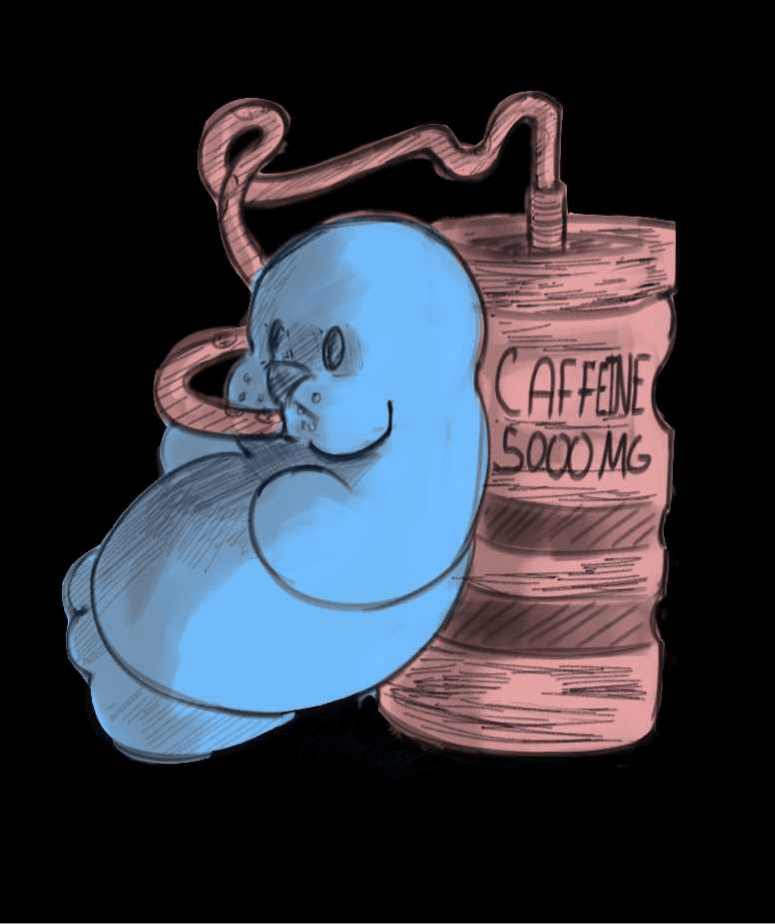
The U.S. Food and Drug Administration (FDA) considers up to 400 mg of caffeine intake a safe amount for a healthy adult. Energy drinks usually contain between 100 to 300 mg of caffeine
per serving, while a coffee or espresso drink has around 120 mg. When talking with students around campus, one senior stated their main reason for caffeine consumption was when they “need an extra boost to get me through the day and assignments.” In a study by the University of Arizona, caffeine was found to increase alertness and muscle performance, while also frequently improving mood and enhancing mental and physical energy. However, it was also found that while students who ingest caffeine show higher productivity levels than those who do not, it does not aid in memory performance. So, those late-night study sessions before your test with a Red Bull in hand are not actually beneficial. Especially since regular caffeine consumption can reduce total sleep time by 45 minutes and sleep efficiency, which is the percentage of time spent sleeping while in bed, by seven percent.
The NCAA also has restrictions for athletes’ caffeine intake, banning 15 micrograms per milliliter in a urine test, which translates to roughly 500 mg consumed two to three hours before competition.
“I think they help me keep energy during activity. I personally think I have a better workout, game or practice if I drink one before and it helps get me energized,” says freshman soccer player Camyrn Marcondes when speaking about her energy drink consumption before activity.
Caffeine consumption is shown to increase performance levels in endurance sports where fatigue is greater, like in soccer, lacrosse and basketball. Caffeine can also enhance cognitive function under stress and sleep deprivation, but nothing is better than quality sleep, especially for athletes’ muscle recovery. However, caffeine mixed with adrenaline can cause higher blood pressure, anxiety and jitters.
Repeated caffeine use can lead to addiction and, since caffeine is a stimulant drug, experiencing withdrawal symptoms when you stop consuming it is very likely. These symptoms can begin within 12 to 24 hours and often include headaches, irritability, difficulty concentrating, drowsiness and disruptions in sleep, further highlighting the importance of moderation. On the flip side, excessive caffeine consumption, more than 400 mg per day, can lead to a range of negative health effects, including rapid heart rate, high blood pressure, heart palpitations, insomnia, anxiety and tremors. If consumption continues to rise, individuals may experience caffeine intoxication, with severe symptoms like severe jitters, heightened anxiety, gastrointestinal distress and a dangerously elevated heart rate. In extreme cases, caffeine intoxication may progress to overdose, which can result in seizures, cardiovascular failure and in rare instances, death.
Caffeine clearly plays a huge role in college life, giving students a quick boost for academics and athletics, but it comes with trade-offs that many students overlook. While it can increase alertness, improve endurance and help push through busy schedules, it does not replace the benefits of proper sleep and consistent recovery. Relying too heavily on caffeine can ultimately harm performance, disrupt sleep and may lead to dependence and negative health effects. Now believe me, I am not trying to sway anyone away from caffeine entirely – I love an iced coffee
and Celsius just as much as the next girl – but by being more aware of how much caffeine we consume and why, students can make smarter choices that support both our academic and athletic success without sacrificing efficacy and our long-term health.
 The Collegian